





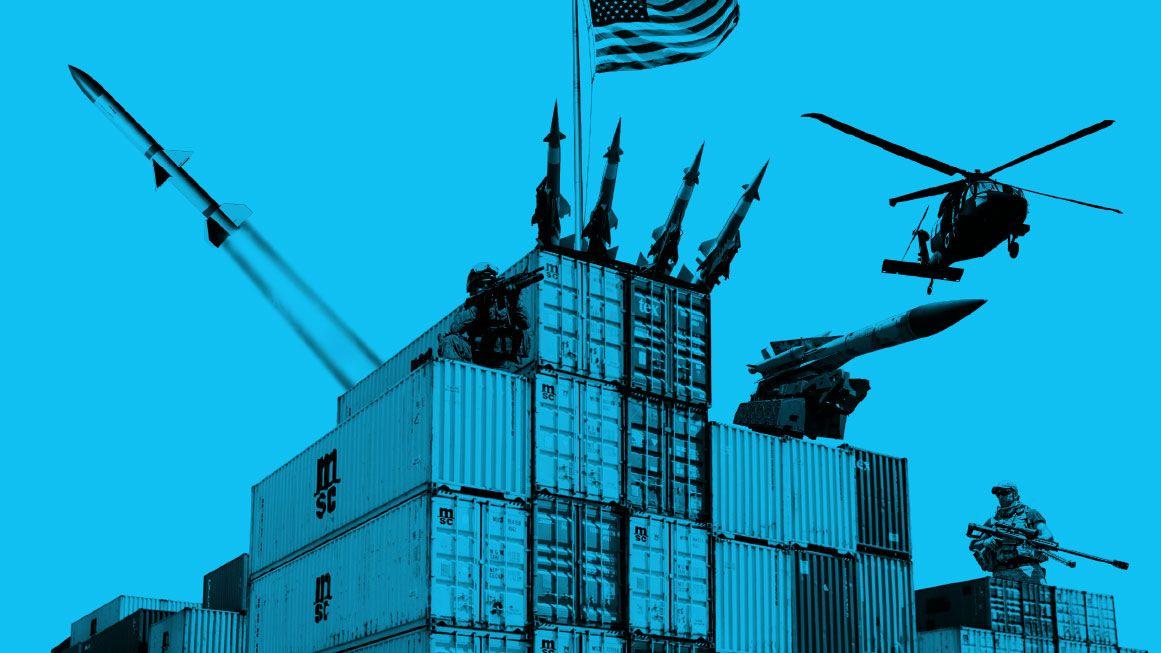
On January 20, 2025, President Trump’s "America First Trade Policy" was published on the White House website under presidential actions. The policy begins with a bold statement: “My Administration pursued trade and economic policies that put the American economy, the American worker, and our national security first. This spurred an American revitalization marked by stable supply chains, massive economic growth, historically low inflation, a substantial increase in real wages and real median household wealth, and a path toward eliminating destructive trade deficits.” This statement sets the tone for a trade agenda that frames economic policy as a cornerstone of national security and domestic prosperity.
An Overview of “America First Trade Policy"
The "America First Trade Policy” is set to prioritize American workers and businesses by promoting investment and productivity, as well as enhancing industrial and technological advantages. One of its central goals is addressing the U.S.’s substantial trade deficits in goods. To tackle these deficits, the policy proposes global supplemental tariffs as a remedy and outlines the role of the External Revenue Service in collecting duties, tariffs, and foreign trade revenues. Furthermore, the policy emphasizes identifying unfair trade practices by other countries and implementing appropriate remedies.
The policy discusses various trade agreements, including the US-Mexico-Canada Agreement (USMCA), and highlights the importance of ensuring fair exchange rates between major U.S. trading partners and the U.S. dollar to address unfair comparative advantages. It also proposes reviews of existing trade agreements, sector-specific agreements, and bilateral trade arrangements to ensure U.S. market access aligns with American priorities.
Regarding economic relations with China, the policy calls for a four-year review of actions taken under the Section 301 investigation into China’s policies on technology transfer, intellectual property, and innovation, with potential tariff modifications as part of this review.
An Economists’ View
While the policy according to the Trump administration focuses on immediate benefits, it diverges from the general economic consensus, which holds that large-scale and unilateral tariffs tend to harm the broader economy in the long run. Most economists argue that in advanced economies, job losses are more often caused by automation and technological change than by import competition. Using tariffs as a remedy for job losses in advanced economies, such as the U.S., does not hold up well as an argument because these issues are not the primary causes of job displacement. By focusing on tariffs, the policy may misdiagnose the root causes of employment challenges and fail to address the larger structural changes impacting the workforce. Tariffs may offer temporary protection to certain industries, but they can raise costs for businesses and consumers, reduce international trade flows, and invite retaliatory measures from other countries.
Despite these potential drawbacks, Trump’s trade agenda can be understood within the context of his broader political and strategic goals. He frequently frames tariffs as a bargaining chip to secure more favorable trade deals. By imposing or threatening tariffs, he aims to gain leverage over trading partners to ensure better market access for American goods and services. This approach reflects his "Art of the Deal" philosophy, which prioritizes negotiation tactics over adherence to traditional economic principles.
Influential figures in Trump’s circle, such as Peter Navarro, advocate for more protectionist trade policies. These advisers emphasize geo-strategic, national security, and industrial policy angles over traditional free-trade approaches. Trump’s policy underscores the critical relationship between trade and national security. He argues that reliance on foreign suppliers, particularly for critical supply chains, creates vulnerabilities during times of crisis and conflict. Protecting and strengthening domestic industries, even at a higher economic cost, is viewed as a necessary safeguard.
The Trump adminstration often views trade deficits as failures of previous administrations' policies, despite economists pointing out that deficits are largely influenced by macroeconomic factors like savings and investment rates. His approach relies on protectionist measures and tariffs to address these deficits, aligning with his broader vision to reduce public spending and cut foreign investment. This vision aligns with the ideas of figures like Elon Musk, who advocate for cutting foreign investment by trillions of dollars to refocus on domestic priorities.
The "America First Trade Policy" is not just an economic strategy; it reflects a political calculus. Simple economic logic often takes a backseat to the complexities of political motivations. Fulfilling campaign promises to protect American industries and workers is central to Trump’s populist platform. By taking a tough stance on trade, he reinforces his image as a defender of the American worker against foreign competition. Additionally, once tariffs are implemented, reversing them can be politically costly. Admitting policy failure may undermine credibility, leading to the persistence of protectionist measures.
Trump’s approach reflects the many layers of motivation behind trade policy decisions. Economists may warn about the long-term harm of protectionism, but the short-term political appeal of "America First" policies often takes center stage. The focus on immediate wins and national security objectives overshadows broader economic consensus, which sees these measures as counterproductive in the long run. This policy captures how deeply politics shapes trade decisions, reminding us that economic policies often serve more as tools for political strategy than as solutions for economic challenges. The final question to ask is whether these short-term gains are worth the price of sidelining long-term economic stability—a question the future will inevitably answer.