





BEIRUT, Lebanon (Enmaeya Opinions) — The ever-growing humanitarian and political crises around the globe have led to a growing number of people in need of varying types of assistance. This assistance is usually organized and provided by international organizations such as United Nations agencies and non-governmental organizations; however, this humanitarian assistance has been constantly shrinking and deemed insufficient to provide the resources needed for populations in vulnerability. This situation in turn has opened the door for multinational corporations to participate in these humanitarian quests. At a surface level, this may seem as an added value for humanitarian organizations to do more work and increase performance, but these corporations tend to have underlying business goals and benefits hidden within providing this humanitarian aid.
Lebanon is no stranger to political crises that have accumulated for the past decades. These political events have triggered mass migration towards Lebanon which has become host to the largest number of refugees per capita globally including Palestinian, Ethiopian, Sudanese, Iraqi, and Syrian refugees. This has placed significant pressure on Lebanon’s already inadequate education, health, and economic infrastructure. Recent events such as the 2020 Beirut port blast and COVID-19 pandemic severely degraded this infrastructure, with the most recent 2024 Israeli war putting Lebanon on its last legs. After the Beirut port blast, Lebanon witnessed a surge in humanitarian response to help those affected by the blast. Amidst this response, corporations have played a key role in assisting and funding these humanitarian organizations with food, beverages, water, medical supplies, and education scholarships for those in need. With the absence of a strong state, these corporations have taken the opportunity to become major contributors in providing aid for humanitarian organizations which have found it convenient to collaborate with corporations for reasons including minimum requirements.
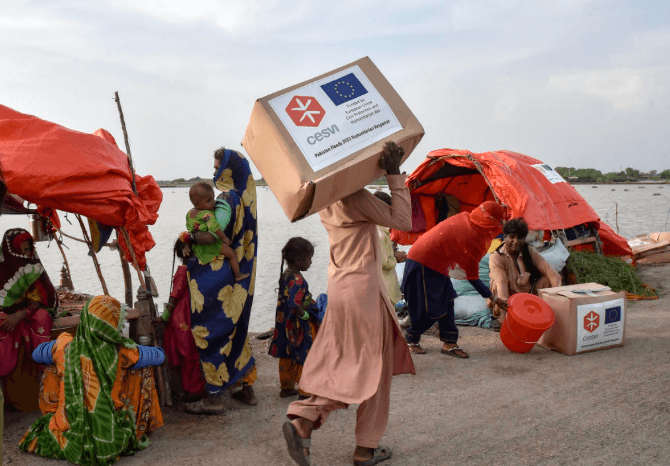
In return for the assistance given, these corporations have conditions for the humanitarian with the aim of boosting the marketing of their products and presenting a responsible image. For instance, conditions would include showing their logo on the distributed items and videos of people receiving their donations to be posted on their social media platforms.
Several ethical dilemmas stem from such collaborations, most notably that many of these corporations sell products that are harmful to health and present major risk factors for chronic diseases, from the tobacco, alcohol, ultra-processed food and beverage industries, such as cancer and cardiovascular diseases which are leading causes of death globally. The corporations have found an opportunity in marketing their products within low and middle-income countries where regulation of consumer products is slack, through assisting local humanitarian organizations. This in turn creates an environment where consuming unhealthy products is normalized by the general public including vulnerable populations affected by crises, ultimately to increase their profit with disregard to public health, as their prime aim.
When staff working for humanitarian organizations were interviewed and asked about their perspectives of corporations providing financial and other assistance to their organizations, many were unaware of the ethical concerns that come with this assistance. This is a cause for concern, since it suggests that humanitarian agencies are unaware of the hidden agendas of corporations, and are ready to accept any help from the for profit businesses, which paves the way for corporations to remain in the scene of humanitarian aid and serving as corporate social; responsible actors, while normalizing the consumption of their health harming products among the populations being served. This assistance would also frame humanitarian aid as being more corporate-like, when the core concept of aid is for it to be humanitarian and not for-profit, which also implies that major corporations are profiting off the challenges that people face.
Several interviewees also mentioned that individuals receiving these donations are not likely to be impacted by the corporation donating these resources, since they would not be able to afford these products anyway, or they simply do not know who the corporation is. However, others argued that these corporations are without doubt creating new future customers one way or the other, since individuals receiving these donations are more than likely to become loyal to their brands or simply spread the word on how these certain corporations helped them in times of need, creating an emotional attachment to the brands, which is in line with the hidden goals of these corporations.
These interviews highlight that with the increased need for humanitarian support, collaborating with corporations has become more acceptable as a result of decreasing aid from international organizations, and the fact that corporations are more open to negotiations and are less bureaucratic than international agencies, makes the collaboration process all the more simple. This stresses the need for the development of due diligence guidelines that help these organizations assess the corporations’ profiles and requirements before accepting their assistance so that they avoid unintended harm to the people they serve and to them as humanitarian organizations.