





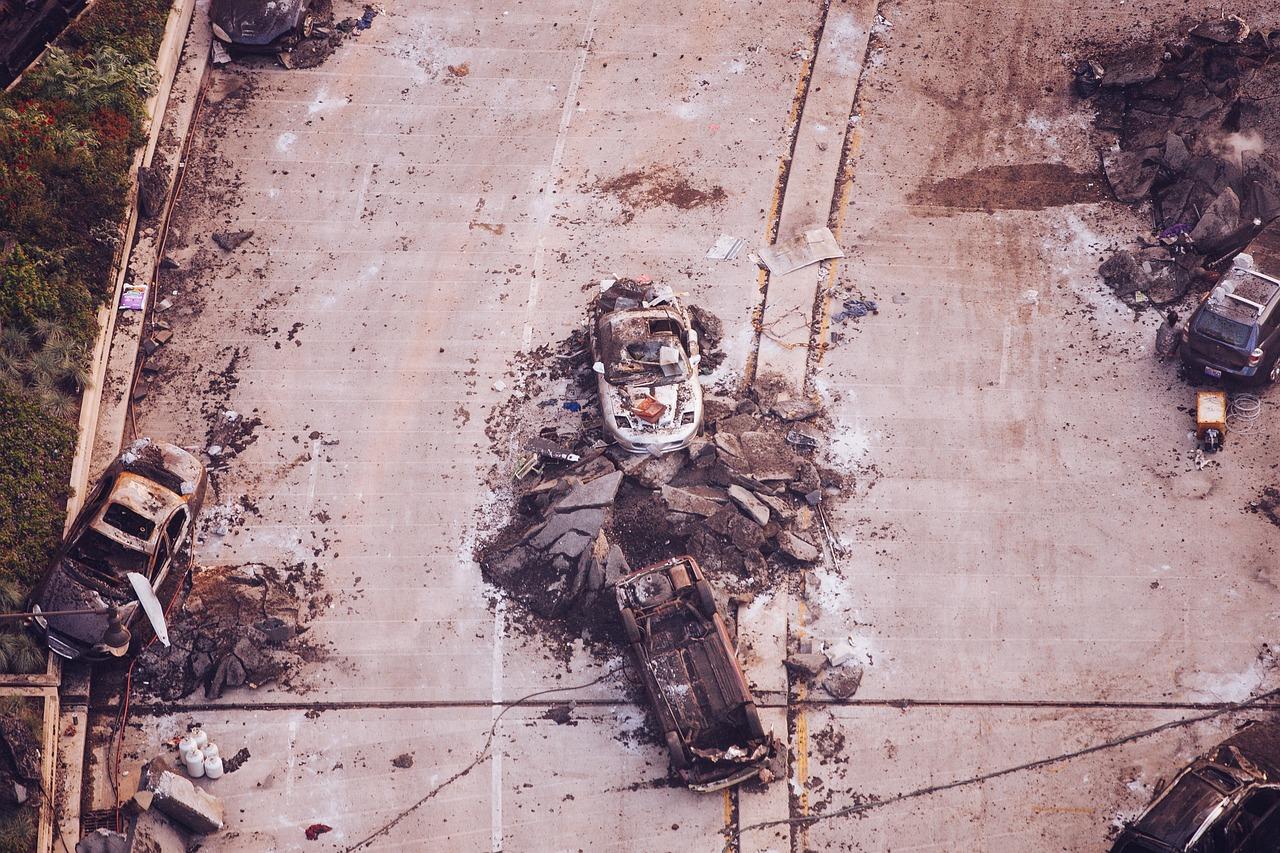
BEIRUT, Lebanon (Enmaeya Opinions) — Lebanon witnessed 9,214 tension-related incidents between December 2020 and October 2021. Interpersonal or intercommunity conflicts caused a staggering 33% of these incidents, indicating that conflicts are often resolved outside of legal systems. In a concerning 24.6 percent of cases, the situation escalated into violence.
The breakdown of violent events offers a bleak picture: 1,353 conflicts, 286 riots, 115 violent thefts, 104 murders, and 62 kidnappings. These findings are more than just statistics; they are indicators of a society dealing with a multitude of challenges. Communal insecurity, combined with a lack of the rule of law, political unrest, and economic decline, were the key drivers of violence. These issues, in their respective order, topped the themes of incidents recorded. These findings are a clear call for coordinated measures to prevent violent extremism. They are detailed in the UNDP's annual report, "Real-Time Monitoring and Mapping of Tension-related Incidents in Lebanon," which was released in January 2022.
The United Nations states that "violent extremism is an affront to the purposes and principles of the United Nations." This international outbreak of violent extremism jeopardizes global peace and security, violates human rights, and inhibits long-term development. The United Nations states that "no country or region is immune from its impact." The persistent violations of humanitarian law in Gaza, as well as the ongoing war in Ukraine, exacerbate the instability of the situation. The emergence of violent extremism has not only exacerbated existing humanitarian crises in war zones throughout the world, but it also poses a growing threat to global security, as its presence may be felt in any country.
Defining Violent Extremism (VE) and Preventing Violent Extremism (PVE)
It’s difficult to provide just one definition of violent extremism. But the most common and widely circulated definition is that “violent extremism is the beliefs and actions of people who support or use violence to achieve ideological, religious, or political goals.” It has come to my attention that people often confuse the terms violent extremism and terrorism. However, these terms are not synonyms, and there is a nuanced difference between the two. Violent extremism is defined by beliefs and actions. Terrorism, on the other hand, is an act of violence in itself. Another commonly used term is radicalization, which occurs when a person's views shift from moderate to radical, and they seek drastic social change. This is not necessarily problematic and does not mean such individuals will become violent. Not all radicals develop into violent extremists. Prevention entails creating policies that can be incorporated into a societal culture to improve the community's ability to protect itself from violent extremism. Preventing violent extremism entails strengthening people's resilience and addressing the root causes that may lead them to succumb to violent extremism. Violent extremism in Lebanon is the result of a complex interaction of structural and precipitative factors that drive radicalization and give individuals who join violent extremist groups a sense of purpose.
Identifying Root Causes
The root causes of VE are diverse and complex. No single driver leads to VE, nor is it a linear process. Rather, it is a complicated and complex combination of individual incentives, structural motivators, and enablers that lead to violent extremism. This is often referred to as the push and pull factors of VE. Push factors are typically economic, such as poverty and unemployment, or political, such as injustice, human rights violations, and sectarianism. Pull factors, on the other hand, include the presence of a charismatic leader, the thrill of adventure, a lack of self-agency, and hopelessness.
Various political, socioeconomic, ideological, and religious elements contribute to the rise of violent extremism in Lebanon. Political issues include poor governance, the fragility of the state, and political dissatisfaction. Socioeconomic challenges such as unemployment, poverty, and lack of education can foster radicalization. Ideological and religious influences involve differing views on religion and secularism. Childhood experiences also play a role in making individuals vulnerable to extremist ideologies. These factors commonly produce grievances that are exploited as tools for mobilization into violent extremism. In Lebanon, perceived injustices can significantly motivate individuals to align with extremist groups.
Economic Impacts
According to the Institute for Economics and Peace, the global economic impact of violence increased to $17.5 trillion, equivalent to 13% of global GDP. The economic impacts of violent extremism are clear in every society, particularly in Lebanon. A decrease in a country’s peace and security impacts the country’s companies and the private sector economically, whereby foreign and local investments decrease. Consequently, unemployment increases, inflation rises, and the country’s economy goes into recession.
Terrorism impacts Lebanon's economy in both direct and indirect ways. Direct consequences include the destruction of property and infrastructure as well as loss of life. Indirect effects are particularly damaging; terrorism deters tourists, injects uncertainty into markets, changes economic forecasts, and disrupts production as businesses, transportation networks, and public services shut down. These factors contribute to increased state fragility, overwhelming the Lebanese government's ability to cope with economic challenges. Moreover, the financial burden of combating violent extremism—through enhanced security measures and necessary infrastructure repairs—further depletes Lebanon's already scarce and poorly managed resources.
PVE National Strategy and Action Plan
In 2016, the UN Security Council endorsed the Global Action Plan for Preventing Violent Extremism, which includes seven pillars and 70 statements. The 7 priority areas include dialogue and conflict prevention, strengthening good governance, human rights and the rule of law, engaging communities, empowering youth, gender equality and empowering women, education and skill development and employment facilitation, and strategic communications, the Internet, and social media.
In March 2018, the Lebanese Council of Ministers endorsed the National PVE strategy. Lebanon became the first country in the region to have a national strategy dedicated to preventing violent extremism. The pillars of the Lebanese national strategy are aligned with the global action plan, highlighting good governance as a separate pillar and adding urban, rural, and community engagement. The strategy development process progressed from an all-government approach, including all governmental institutions, to an all-society approach. More than 300 national and local institutions and the private sector were part of developing the national action plan for the strategy.
Interview with the National Coordinator for Preventing Violent Extremism in Lebanon
Dr. Rubina Abu Zeinab, Lebanon's National Coordinator for Preventing Violent Extremism, granted me the opportunity to do an interview. During the interview, Dr. Rubina stated that “violent extremism is a major obstacle to development, so understanding and preventing it becomes a higher priority for development actors, but it should be recognized that it is difficult, if not impossible, to determine a linear process that leads an individual or a group to support or join violent extremism or commit an act of terrorism.” So, the first step in dealing with the economic and social ramifications of VE is to have a thorough understanding of the underlying causes.
She made it a point to emphasize that "by understanding drivers, triggers, and trajectories of violent extremism, we can plan better exit strategies for deradicalization, rehabilitation, and reintegration."
I asked her about her experience interviewing prison inmates for her doctoral study, and she shared quotes from two different convicts:
“If time took me back, I would have recruited more citizens and strengthened the capacity of my organization.” - Imad, Syrian citizen, 47
“A family member urged me to join ISIS when I was 16 years old after I lost another family member and was seeking revenge. If I could go back in time, I would have abstained from joining the group.” - Mohammad, Syrian citizen, 21
Policy Recommendations
Based on my research, global data statistics and indicators, and the insightful interview with Lebanon’s National Coordinator for Preventing Violent Extremism, I have inferred some necessary policy recommendations in dealing with this war on terrorism and the deteriorating security situation in Lebanon, which by nature lean heavily toward raising awareness, and a comprehensive community and academic-centered approach:
Addressing the underlying causes of extremism, as described throughout the article, and engaging in peace building efforts are key steps toward increasing the country's economic prosperity and resilience and discouraging the resort to violence.
Organizing additional conferences and events on security, international peace, and peace building, whether conducted by experts or students.
Including university courses on violence studies, such as violent extremism. This could include general education courses on peacekeeping and security and introductory classes on violent extremism and terrorism.
Implementing practical training programs for community leaders and government officials can also help to address security issues and promote peacebuilding efforts.